2026-10-23 · Kimo Hale
How to Handle Hurricane Debris Removal on Oahu
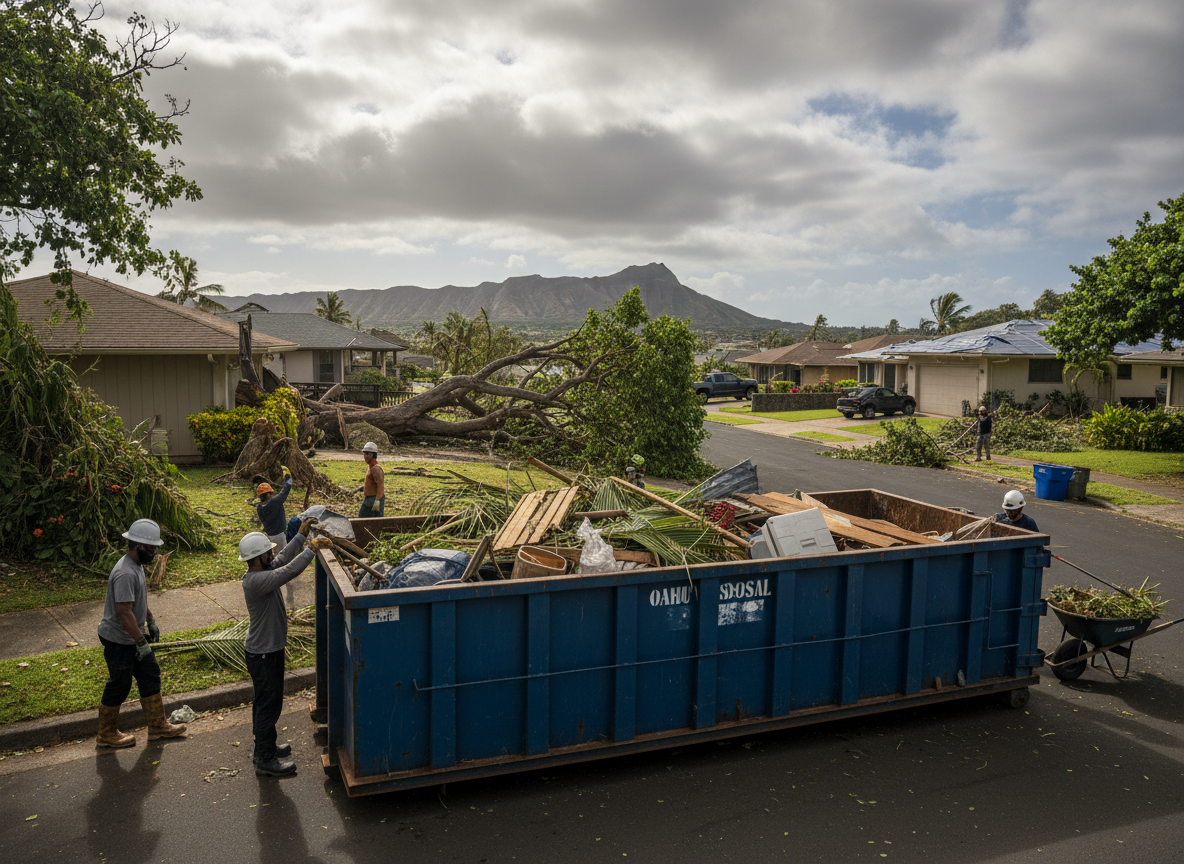
Hurricane debris removal on Oahu starts with sorting materials into separate piles for green waste, construction scraps, and household items, then arranging a Dumpster Rental sized at 20 or 30 yards to handle the volume from a typical single-family home in neighborhoods such as Manoa or Nuuanu. Trade winds that pick up after a storm can scatter loose branches and roofing pieces across sloped lots common in Alewa Heights, so crews secure loads with tarps before transport. Warm tropical temperatures accelerate mold growth on wet drywall and furniture pulled from homes in Kalihi or Palolo, making same-week pickup essential to avoid secondary damage.
Assessing Debris Volume After Storms
Homeowners in Honolulu County first walk their property to measure piles by the cubic yard rather than weight, noting that a standard three-bedroom house in Kaimuki can generate 15 to 25 yards of mixed debris after high winds strip roofs and fences. Trade winds common during the dry season push lightweight items like palm fronds into neighboring yards in Moiliili, so residents mark shared boundaries before loading begins. Soil conditions near Diamond Head often include rocky fill that makes wheelbarrow movement slower, requiring extra time to clear driveways before a container arrives. Checking for hidden hazards such as broken glass or rusted metal from older homes built before 1970 prevents injuries during the sort. This step also reveals whether separate loads are needed for appliances versus vegetative waste that must go to approved composting sites on the island.
Sorting Materials for Efficient Removal
Separate green waste such as downed trees and shrubs from construction debris like shingles and lumber, because landfills in Honolulu County charge different tipping fees for each category. In areas like Downtown Honolulu or near Iolani Palace, narrow streets limit truck access, so smaller 10-yard containers may be staged first for initial cleanup passes. Residents in Kalihi often encounter mixed loads that include both concrete chunks from driveways and household items displaced by flooding, requiring clear labeling on each pile. Residential Dumpster Rental containers work well here because they fit standard residential driveways without blocking sidewalks in dense blocks. Numbered steps help: first bag all loose trash, second stack lumber flat, third bundle branches under four feet long. This organization cuts loading time by half when the truck arrives from the yard at 233 S Beretania St.
Placement Rules During Rainy Periods
Containers must sit on level pavement or compacted gravel rather than soft soil common after storms in Nuuanu and Manoa valleys, where runoff can shift a 20-yard unit overnight. The linked guide Honolulu Dumpster Placement Rules for Rainy Season covers permit needs when placing units on public rights-of-way in Waikiki or Kakaako. Trade winds gusting above 25 mph can lift unsecured tarps, so crews use ratchet straps rated for 1,000 pounds and check tension twice daily. Avoid blocking fire lanes in older neighborhoods like Palolo where streets measure under 20 feet wide. Check with Honolulu County public works before positioning near Pearl Harbor access roads, as federal restrictions apply within certain buffers.
Scheduling Pickup Around Local Traffic Patterns
Call between 8am and 6pm Monday through Friday or 9am to 2pm on Saturday to book a container that matches your debris volume, allowing 48 hours notice during peak post-storm weeks. Trucks serving Kailua and Pearl City often route through the H-1 corridor, so early morning deliveries avoid rush-hour delays near the Bishop Museum area. After loading, confirm the driver inspects for prohibited items such as tires or paint cans that trigger extra fees at the landfill. Follow-up visits may be needed for oversized items like water heaters from flood-damaged homes in Aiea. Keeping receipts with dates and weights helps when filing insurance claims for properties in Hawaii Kai or Aina Haina.