2026-10-23 · Kimo Hale
Honolulu Dumpster Placement Rules for Rainy Season
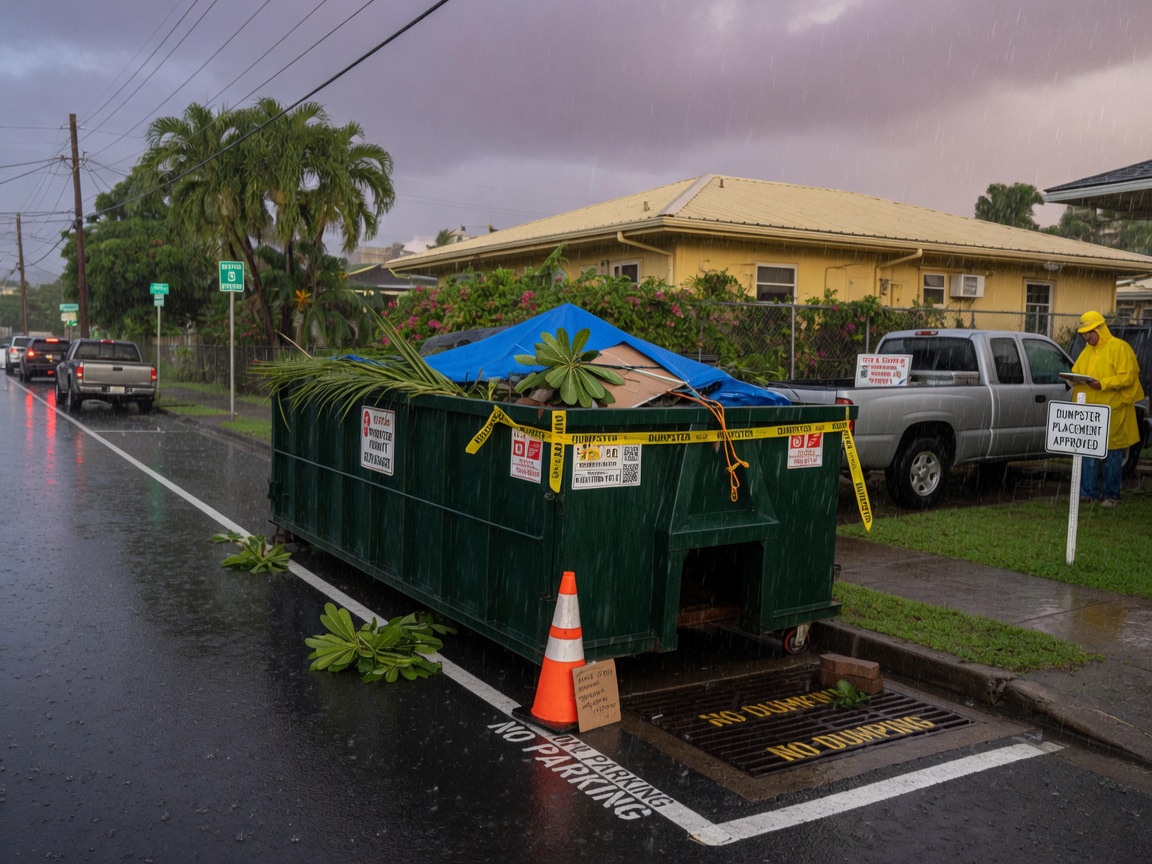
Honolulu dumpster placement during rainy season requires positioning units on stable, elevated surfaces at least several feet from storm drains and low-lying runoff paths to prevent water accumulation and shifting.
Drainage and Terrain Considerations in Honolulu County
Honolulu's tropical climate brings trade winds and periodic heavy showers that turn streets and yards into temporary waterways, especially on the slopes of Manoa and Nuuanu where water flows quickly downhill. Placement on these hillsides means choosing spots with natural grading away from the unit so rainwater does not pool underneath and soften the ground. In flatter sections of Kakaako or near Pearl Harbor, crews watch for poor drainage around older concrete pads that can trap water for days. Checking the exact spot after a typical shower shows whether the chosen location will stay firm or turn muddy enough to cause the dumpster to settle unevenly. These conditions change how quickly a load can be accessed and how safely the truck can approach without getting stuck.
Rules for Streets and Sidewalks Near Waikiki and Downtown Honolulu
Placement along streets in Waikiki or Downtown Honolulu must keep the unit clear of pedestrian paths and fire lanes while accounting for the frequent rain that makes asphalt slick. Local crews position dumpsters so the long side runs parallel to the curb with the door facing the property for easier loading, yet far enough from intersections to avoid blocking water flow into gutters. In areas like Kaimuki or Kalihi, older narrow streets leave little room, so the unit often sits partially on the driveway apron rather than the roadway itself. Checking for overhead wires and low branches becomes extra important because wet foliage can sag and interfere with loading. These choices keep the rental functional even when showers arrive in the afternoon.
Preparing Sites in Residential Areas Such as Manoa and Moiliili
Residential properties in Manoa and Moiliili often feature sloped driveways and older homes with limited flat space, so placement starts by clearing loose gravel or leaves that rain would otherwise wash under the unit. Crews look for patches of compacted soil or existing concrete that will hold weight without shifting once saturated. In Palolo or Alewa Heights, the steeper lots require blocking the wheels on the downhill side to stop any movement during a downpour. Residents can inspect the ground the morning after rain to confirm the spot stays usable. This preparation reduces the chance of delays when the load needs to be hauled away.
Handling Runoff Near Landmarks and Service Connections
Areas around Diamond Head or the Bishop Museum see water moving across open ground during showers, so dumpsters sit back from natural swales and away from irrigation lines that could be damaged. In Moiliili and Nuuanu, proximity to older storm systems means verifying the unit will not sit directly over catch basins that fill rapidly. Linking to related guidance on storm debris helps when larger cleanups follow extended wet weather. Readers can review How to Handle Hurricane Debris Removal on Oahu for steps that build on basic placement practices. The same principles apply when serving homes in nearby Aiea or Kailua where similar terrain appears.
Practical Steps for Compliant Placement Across Honolulu
Start by walking the intended spot during or right after rain to observe actual water movement. Mark the area with cones or tape so delivery matches the tested location. Keep the unit doors facing the work zone and ensure at least one side stays open for access even if tarps are added later. For residential jobs, review the layout with the property owner so vehicles can reach the spot without crossing saturated lawns. These checks keep the rental period smooth regardless of when showers arrive.